
Processing
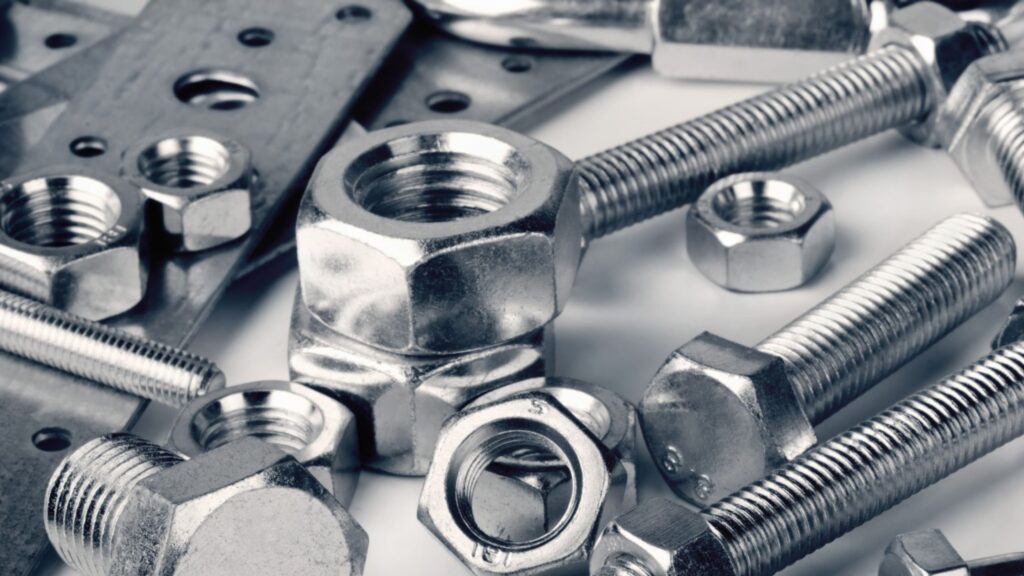
Production of small metallic parts represent a minimal portion of manufactured products like home appliances, cars or hydraulic systems. Even so, it ensures business continuity, security and quality, making the difference between a system that works and one that fails.
What are the quality requirements of small metallic parts? We’ll see in this article.
Small metallic part production includes all small dimension components – such as screws, bushings, pins, compasses, washers, spacers and fittings – which, although almost invisible to the end user, are structural and functional elements indispensable in a wide range of industrial applications.
What are these small parts used for?
To ensure fastening, movement, hold, connection within systems.
Or more simply put, to guarantee precision, reliability and repeatability within production processes in which even the slightest dimensional change can compromise the entire assembly or reduce the useful life of the product.
Also read “Precision milling in household appliances: useful information”
To simplify, we can identify two main quality requirements: dimensional precision and tolerances.
The management of tolerances is not a minor technical detail: it is one qualitative standard that determines the competitiveness of the producer and the excellence of the result.
The choice of materials and surface treatments is another important aspect.
In fact, we know that each sector requires specific properties: mechanical resistance, lightness, conductivity, anti-corrosion or thermal stability.
Stainless and steel alloys are among the most used materials thanks to their good workability and the capacity to withstand heavy conditions.
Lightweight alloys, like aluminium, offer advantages in terms of reduced weight and optimum heat conductivity, making them ideal for applications in which weight is a priority.
Parts in brass are particularly indicated for connectors, valves and aesthetic components.
High-performance plastics, however, find application in contexts that require electrical insulation, low friction or chemical resistance.
Surface treatments – like galvanisation, chrome plating or burnishing – complete the functionality of the material, improving protection, hardness and the aesthetic aspect.
Choosing the correct pairing of material and treatment means guaranteeing dependability, security and durability, reducing the risk of malfunction and optimising costs.
Also read “Metal tempering in small part production: when is it necessary”
Quality is the result of rigorous controls: the accurate verification of tolerances, geometry and surface finish is the phase of the process that allows the avoidance of defects that could compromise the entire assembly or reduce the useful life of the final product.
Advanced measuring instruments such as three-dimensional measuring machines (CMMs), optical comparators, profile projectors, roughness meters and laser systems are used to detect even slight deviations from the defined standard. These technologies allow rapid, repeatable and documentable checks, guaranteeing the client complete full traceability and objective controls on each production lot.
A further level of quality derives from the implementation of procedures based on standards like the ISO 9001, that certify consistency in processes and a systematic approach to continuous improvement.
Choosing a trustworthy partner means evaluating technical skills, quality of processes and the ability to guarantee production continuity.
Experience, transparency and support in the design phase allow cost and time optimisation, guaranteeing components that are dependable, high performing and compliant with required industry standards.
